
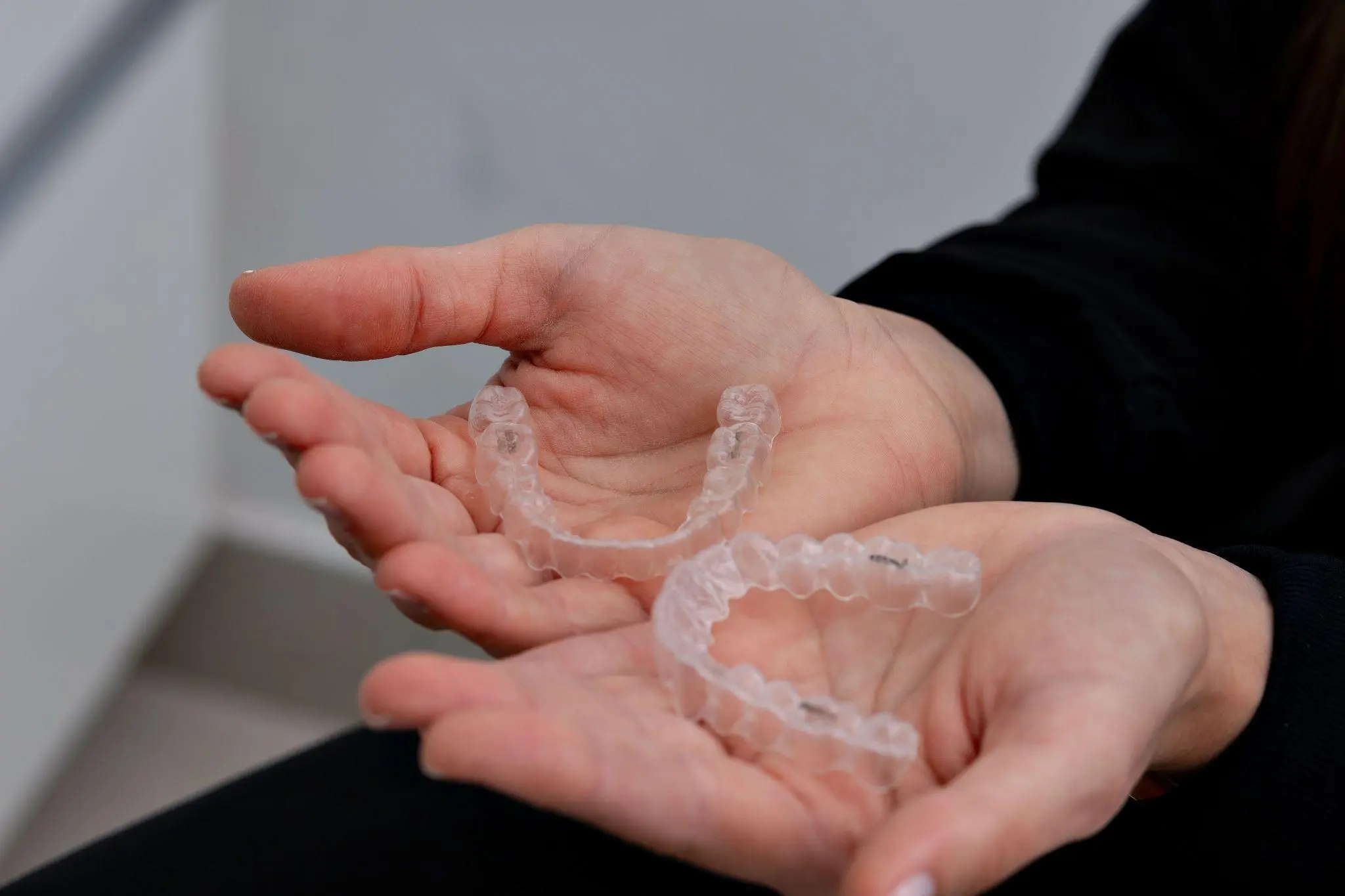
Can I Get Invisalign? What a Livermore Orthodontist Checks Before Saying Yes
The 5 clinical checks an orthodontist uses to decide if Invisalign will work for you, and the cases where it is not the best option.
October 2, 2026 · Orthodontist (Loma Linda University, AAO Member)
Most adults and teens qualify for Invisalign. But "most" is not "all," and the generic checklists you find online that list the obvious things like healthy gums, no cavities, and mild crowding, skip the clinical details that actually determine whether clear aligners will work for your specific case.
We’re going to walk you through five factors a good orthodontist will evaluate before recommending Invisalign, what conditions it handles well, where it falls short, and what happens during the free 3D scan that gives you a definitive answer.
The Five Things an Orthodontist Actually Checks
When you sit down for an Invisalign evaluation, the assessment is more involved than a quick look at your teeth. Over more than 20 years of orthodontic practice, Dr. Rondon has refined this evaluation to five clinical factors that determine whether Invisalign is the right treatment — or whether another approach would serve you better. You can read more about Dr. Aaron Rondon and his clinical background.
Bite classification and severity
Orthdontists categorize bites into three classes: Class I, where the jaws relate properly but the teeth are misaligned; Class II, where the upper jaw sits forward relative to the lower; and Class III, where the lower jaw is ahead of the upper. Invisalign handles most Class I and mild to moderate Class II cases effectively. Severe Class II or Class III discrepancies often require braces, jaw surgery, or a combined approach.
Gum and bone health
Active periodontal disease, inflamed gums, bone loss around the roots, deep pocketing, must be treated and stabilized before any orthodontic movement begins. Moving teeth through compromised bone risks accelerating bone loss rather than improving your smile. Healthy gums and stable bone are prerequisites, not preferences.
Case complexity
This covers the number of teeth that need to move, the degree of rotation on individual teeth, and whether vertical movement (pushing a tooth up or pulling it down) is required. Mild to moderate complexity is well within Invisalign's range. Heavily rotated teeth or cases requiring significant vertical correction push toward the limits of what aligners can predictably achieve.
Compliance prediction
Invisalign only works when worn 20 to 22 hours per day. The aligners come out for eating and brushing and go back in immediately after. If your daily routine, work environment, or habits make that schedule unrealistic, the treatment will underperform regardless of how well the case is planned. This is not a character test, it is a physics requirement.
Existing dental work
Crowns, bridges, veneers, and implants affect how attachments, which are small tooth-colored bumps bonded to teeth during treatment, are placed and how securely they hold. Implants cannot be moved at all because they are fused to bone, so they function as fixed anchor points in the treatment plan. A few crowns or a single implant does not rule out Invisalign, but it changes how the case is designed.
Conditions Invisalign Treats Well
Invisalign is effective for a well-defined range of orthodontic conditions when the case falls within mild to moderate severity.
Crowding is the most common reason adults seek Invisalign. When teeth overlap because the jaw does not have enough arch space, aligners apply sequential pressure to shift each tooth into its planned position. Mild to moderate crowding responds predictably to aligner therapy.
Spacing and gaps between teeth, whether it be from genetics, tooth size discrepancy, or previous extractions, typically close well with Invisalign because the movement is relatively straightforward: teeth slide toward each other along the arch.
Overbite, where the upper front teeth overlap the lower teeth vertically, is correctable in the mild to moderate range. Many Invisalign cases combine aligner trays with small elastics to manage the vertical component of an overbite.
Posterior crossbite involving one or two teeth typically responds well to aligners. This occurs when an upper back tooth sits inside the corresponding lower tooth rather than outside it.
Mild anterior open bite, where the front teeth do not meet when the back teeth are closed, is treatable with Invisalign in less severe presentations, though more significant open bites may need braces.
General alignment and straightening for cosmetic improvement is the simplest category and where Invisalign performs most predictably.
LOO's Comprehensive tier at $4,900 covers even the more complex end of these conditions. You can see pricing for each case type in our full cost breakdown. Our page on how Invisalign works covers the treatment mechanics in more detail.
Cases Where Invisalign Is Not the Best Option
Honesty and transparency about limitations is part of the evaluation. These may be the cases where Dr. Rondon is more likely to recommend braces, surgery, or a combined approach rather than Invisalign alone.
Severe skeletal discrepancies, particularly Class III cases where the lower jaw is significantly ahead of the upper, often require orthognathic (jaw) surgery to reposition the bone itself. Aligners move teeth, not jaws. No amount of aligner refinement changes the underlying skeletal relationship.
Significant vertical tooth movement is difficult with aligners. If a tooth needs to be pulled down into the arch (extruded) or pushed up (intruded) by more than a couple of millimeters, braces provide more predictable force control for that type of movement.
Heavily rotated premolars, rotated beyond approximately 45 degrees, resist the forces aligners generate. The broad, flat root shape of premolars makes severe derotation one of the most well-documented limitations of clear aligner therapy.
Active, untreated periodontal disease disqualifies any orthodontic treatment, not just Invisalign. The gums and bone must be stable before teeth are moved through them.
Multiple missing teeth with no replacement plan can prevent aligners from functioning properly because the trays depend on continuous tooth contact to generate and distribute force. If several teeth are absent and no implants or bridges are planned, the aligner may not seat correctly or deliver the prescribed movement.
Patients who cannot realistically commit to 20-plus hours per day of wear will not get the planned result. This is not a judgment. It is a mechanical reality: teeth only move when consistent force is applied, and aligners that sit in a case on the counter are not applying force.
Dr. Rondon will tell you directly at the consultation if Invisalign is not the right path for your case, and he will explain what would work better.
Can Adults Over 50 Get Invisalign?
There is no upper age limit for Invisalign. The determining factors are gum health and bone density, not the number on your driver's license. Many patients at our Livermore office are between 40 and 65, and several of our best outcomes have been in patients who spent decades thinking about straightening their teeth before finally starting.
Bone density does change with age, and gum recession becomes more common over time. If significant bone loss or recession is present, Dr. Rondon may recommend a periodontal evaluation before starting treatment. This isn’t to rule you out, but to confirm that the foundation is solid before teeth are moved through it.
The clinical reality is that healthy bone responds to orthodontic force at 55 the same way it does at 25. The process may be slightly slower in older adults, but the outcomes are equivalent when the underlying tissue is healthy. You can meet Dr. Rondon at a free consultation to discuss your specific situation.
Can Teenagers Get Invisalign?
Invisalign is available for teenagers once their permanent teeth have fully erupted, which typically occurs between ages 12 and 14. The clinical requirements are the same as for adults, healthy gums, appropriate case complexity, and a willingness to wear the aligners consistently.
The additional variable with teens is compliance. Invisalign teen aligners include blue compliance indicators, which are small dots on the aligner material that fade from blue to clear after consistent wear. These give both the orthodontist and parents a visible, objective measure of whether the aligners are being worn as prescribed rather than sitting in a backpack.
At our Livermore office, we also use AI remote monitoring between in-office visits, which flags early if aligners are not tracking as expected. This catches wear gaps before they compound into a treatment delay.
Not every teenager is a good candidate. If a teen is not genuinely motivated or is likely to lose aligners regularly, braces may be the more reliable path. Dr. Rondon evaluates motivation as part of the teen assessment and will recommend braces if that is the better option. For a full comparison, read our guide on Invisalign vs braces for teens.
What Happens at Your Free 3D Scan Assessment
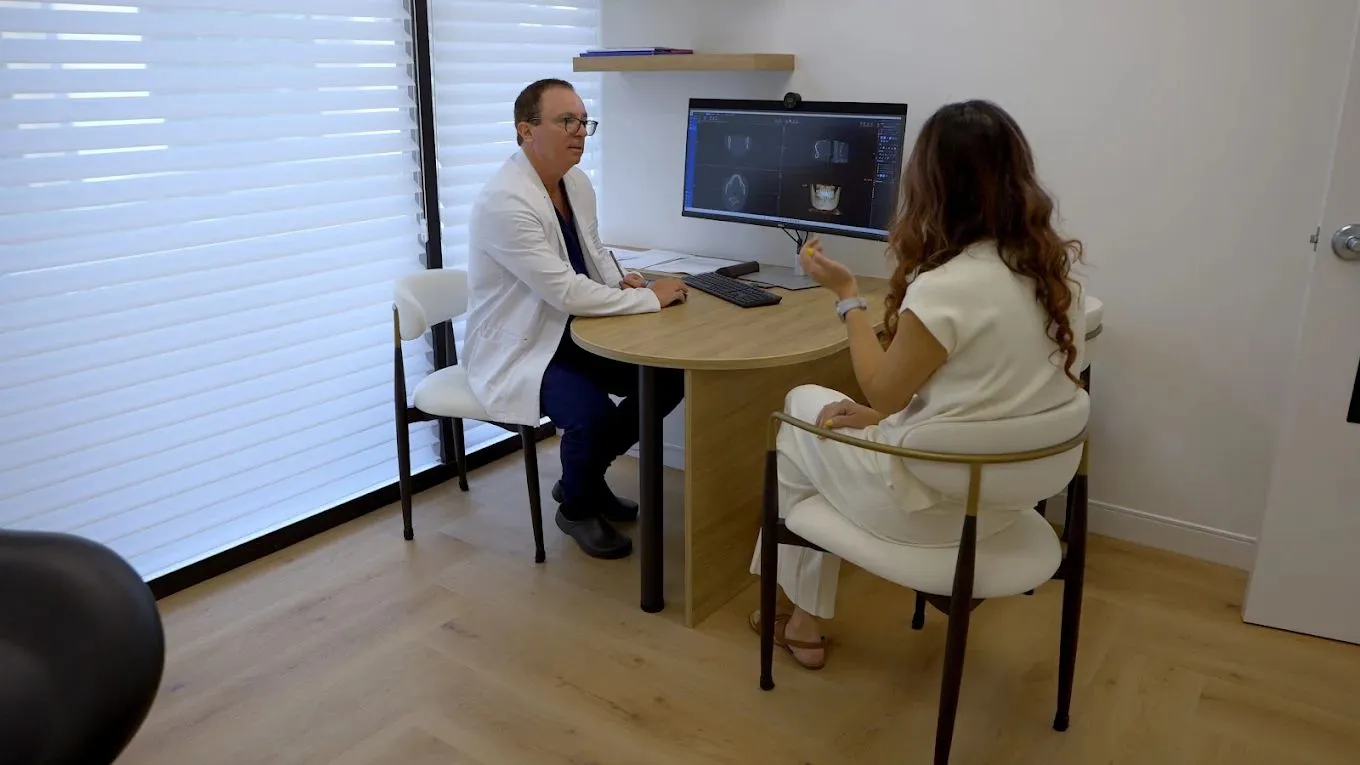
The consultation at Livermore Outlets Orthodontics follows a specific sequence, and knowing what to expect removes any uncertainty you might have before booking.
First, we take an iTero 3D scan of both your upper and lower arches. The scanner captures a complete digital model of your teeth, bite, and gum line in two to three minutes. There are no putty impressions, no mess, and no discomfort.
Second, Dr. Rondon reviews the scan on-screen with you. You will see your teeth from every angle, and he will point out the specific areas where movement is needed and what type of movement each area requires.
Third, he assesses your bite classification and case complexity using the five factors described earlier in this article. It’s important to understand that this is your clinical evaluation, not a sales presentation.
Fourth, he discusses whether Invisalign, braces, or a combined approach is the best path for your case. If Invisalign is not the right option, he’ll say so directly and explain why it isn’t right for your particular case.
Fifth, if Invisalign is recommended, you receive a preliminary treatment timeline and cost estimate on the spot, including what your insurance covers and what your monthly payment would be with financing.
The entire appointment takes approximately 30 minutes. Our Livermore office is open Friday through Sunday, 10 a.m. to 7 p.m. There is zero obligation to start treatment. Book your free 3D scan when you are ready. You can also see treatment pricing on our pricing page.
Book Your Free 3D Scan
The only way to know for certain whether Invisalign will work for your case is a clinical evaluation, not a generic web quiz, not a generic checklist, and not a guess based on photos.
Dr. Rondon will scan your teeth, assess your bite, and give you a direct, honest answer in about 30 minutes. Our Livermore office is open Friday through Sunday, 10 a.m. to 7 p.m. Book your free 3D scan or read patient reviews from patients who started exactly where you are right now.
Frequently Asked Questions
- Who is a good candidate for Invisalign?
- Most adults and teens with fully erupted permanent teeth qualify if they have healthy gums and bone, a case within mild to moderate complexity, and the ability to wear aligners 20 to 22 hours per day. Crowding, spacing, overbite, and mild crossbite are among the most commonly treated conditions. A 3D scan assessment gives you a definitive answer for your specific case.
- What disqualifies you from getting Invisalign?
- Active untreated periodontal disease, severe skeletal jaw discrepancies requiring surgery, heavily rotated premolars beyond approximately 45 degrees, and an inability to commit to 20-plus hours of daily wear are the primary disqualifiers. Multiple missing teeth with no replacement plan can also prevent aligners from seating and functioning properly.
- Can I get Invisalign if I have crowns or implants?
- In most cases, yes. Crowns may require modified attachment placement, and implants cannot be moved because they are fused to bone, but they can serve as anchor points in a treatment plan. A few crowns or a single implant rarely disqualifies a patient. Dr. Rondon evaluates existing dental work as part of the 3D scan assessment.
- Is there an age limit for Invisalign?
- There is no upper age limit. Eligibility depends on gum health and bone density, not age. Patients in their 50s, 60s, and beyond are treated regularly at our Livermore office. If gum recession or bone loss is present, a periodontal evaluation may be recommended before starting orthodontic treatment.
- How long does the free consultation take?
- The initial 3D scan and evaluation appointment takes approximately 30 minutes. You will leave with a clear answer on whether Invisalign is right for your case, a preliminary treatment timeline, and a cost estimate that includes insurance coverage and financing options. Book a free assessment to get started.
- What if Invisalign is not the right option for me?
- Dr. Rondon will tell you directly and explain why. Depending on the case, he may recommend traditional braces, a combined approach where braces handle part of treatment and aligners finish it, or a referral to an oral surgeon if the issue is skeletal rather than dental. The consultation is designed to find the best clinical path, not to sell a specific product.
Next step
Questions about your smile?
Book a complimentary 3D scan. We’ll answer cost, timeline and fit questions specific to your teeth.